ResearchOpen sourceDatasetsBlogEventsCareersTeamContactTry the moment search demo
Publications

Research we can show our work for

Technical reports, preprints and dataset papers. Each comes with an extended abstract, BibTeX and — where we can release it — code and data.

7 publications

14 October 2026·VFR Technical Report 2026-07Moment retrieval

Segment-Level Late Interaction for Moment Retrieval at Billion Scale

Aino Lehtovaara, Mikko Rantasalo, Sanna Kivimäki, Tomasz Wierzba

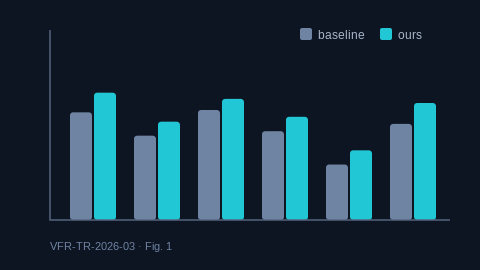
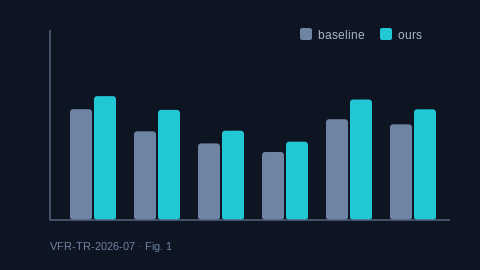
Dense moment retrieval systems usually compress each candidate clip into a single vector, which discards the temporal structure that users search for. We describe the retrieval stack behind VideoFinder moment search, which indexes 1.1 billion half-second segments with 64-byte product-quantised vectors and applies a lightweight late-interaction re-ranker only to the top segments per shard. A temporal merge step converts segment hits into contiguous moments before clip-level ranking. On HETKI-40K the system improves R@1 at IoU 0.5 from 38.2 to 46.9 over a single-vector baseline while keeping median server latency at 38 ms on CPU-only search nodes. We report the engineering trade-offs that mattered most: shard fan-out, quantiser retraining cadence, and how often the merge step should be allowed to bridge short gaps.

PDF virta HETKI-40K
27 August 2026·PreprintMotion & camera understanding

Motion Tokens: Disentangling Camera and Subject Motion from Dense Optical Flow

Elias Nordqvist, Sanna Kivimäki, Hanna Øvergaard

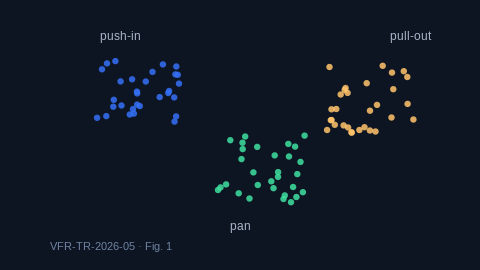
Text queries about video frequently describe motion (“slow push-in”, “drifts upward”, “whip pan to the left”), yet image–text encoders applied frame by frame are nearly blind to it. We introduce motion tokens: a compact set of 16 learned descriptors per segment derived from dense optical flow, trained with a contrastive objective against motion phrases mined from 2.3 million editor-written captions. A homography-based decomposition separates global camera motion from residual subject motion before tokenisation. Adding motion tokens to the segment embedding improves retrieval on motion-centric HETKI queries by 11.4 points R@5 and reduces confusion between opposite camera moves by 63%, at a cost of 0.9 ms per segment at indexing time.

PDF kehys
19 May 2026·VFR Technical Report 2026-03 · Dataset paperEvaluation & benchmarks

HETKI: A Multilingual Benchmark for Natural-Language Moment Retrieval in Licensed Stock Video

Mei Takahashi, Lotta Haapanen, Aino Lehtovaara, Jussi Pelkonen

We present HETKI, a benchmark of 40,212 natural-language queries grounded to time ranges in 9,346 licensed clips, written by professional editors in nine languages including Finnish, Polish, Japanese and Arabic. Unlike benchmarks built from movie captions or instructional videos, HETKI queries describe visual properties that editors search for — motion, colour, composition and mood — and every query carries boundary annotations from three independent annotators. We release the annotations under CC BY 4.0, an evaluation toolkit, and a soft-IoU metric that accounts for annotator disagreement. Baselines show that current video–language models handle object-centric queries well but fall 20 points behind on motion and mood.

PDF hetki-eval HETKI-40K
30 March 2026·VFR Technical Report 2026-02Efficient inference

Distilling Video–Text Encoders for CPU-Only Indexing

Priya Raghunathan, Sanna Kivimäki, Ville Suominen

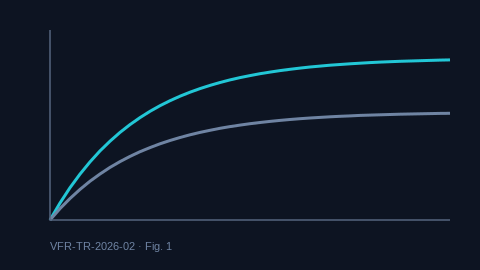
Indexing a growing stock library with a 1.1-billion-parameter video–text encoder requires a GPU fleet whose cost grows linearly with uploads. We distil the encoder into an 86-million-parameter student that runs at 41 segments per second per CPU core after int8 quantisation. Naive feature distillation preserves object semantics but loses temporal information; we show that adding a relational loss over segment pairs within the same shot and a short-range temporal contrastive term recovers most of the gap. The student retains 96.1% of the teacher’s R@5 on HETKI-40K while reducing indexing cost per clip by 14×. We describe the failure modes we encountered, including calibration drift after quantisation and the effect of shot boundaries on pooled features.

PDF kipinä
24 November 2025·Nordic Vision & Speech Symposium (NoViS) 2025Speech & alignment

Shot-Aware Forced Alignment of Speech Transcripts in Edited Video

Jussi Pelkonen, Mei Takahashi, Tomasz Wierzba

Speech recognisers produce word timestamps relative to the audio stream, but edited video introduces offsets that make those timestamps disagree with the frames: AAC encoder priming, MP4 edit lists, variable frame rate from phones and re-timed exports. We show that on a sample of 12,000 user uploads, 31% have an audio–video offset larger than one frame and 7% larger than 120 ms. We propose a shot-aware aligner that combines container-level timeline reconstruction with a constrained forced alignment that snaps word boundaries to nearby shot cuts when acoustic evidence is weak. Median alignment error drops from 92 ms to 23 ms, and moment retrieval on speech-grounded queries improves by 6.8 points R@1.

PDF sarana
8 September 2025·PreprintEvaluation & benchmarks

Where Does a Moment Start? Measuring Temporal Boundary Ambiguity in Retrieval Benchmarks

Mei Takahashi, Hanna Øvergaard, Lotta Haapanen

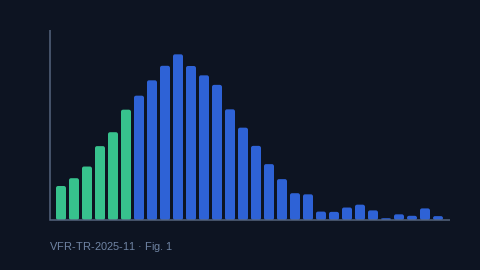
Moment retrieval metrics treat a single annotated time range as ground truth. We collected five independent boundary annotations for 2,000 queries and found that the median disagreement between annotators is 0.84 seconds at the start and 1.31 seconds at the end, larger than the typical improvement reported between competing methods. Disagreement is highest for gradual events such as lighting changes and slow camera moves. We propose evaluating against the distribution of annotations rather than a single range, introduce a soft-IoU variant, and show that it changes the ranking of six published methods on two public benchmarks.

PDF hetki-eval
15 April 2025·VFR Technical Report 2025-04Motion & camera understanding

Loop-Consistency: Detecting Seams in Periodic Video with Flow Continuity

Elias Nordqvist, Priya Raghunathan

Seamless loops are among the most licensed clips on stock platforms, and visible seams are the most common reason they are rejected. We frame seam detection as a test of temporal continuity at the loop joint, comparing frame difference, optical-flow continuity and higher-order motion statistics across the joint with the distribution elsewhere in the clip. The detector flags 94.7% of seams marked by human reviewers at a 2% false-positive rate and runs in under a second per clip. It has been deployed on every upload labelled as a loop since March 2025.

PDF
Work with us

Collaborations, theses and visits

We co-supervise master’s theses and an industrial doctoral programme with a Finnish university partner, host visiting researchers for three to six months, and share HETKI test-set evaluation with academic groups who can’t download the clips.

Propose a collaboration
How we publish
  • Technical reports first, so results are public within weeks of being true.
  • Every number with a confidence interval, and soft IoU next to R@K.
  • Code under Apache-2.0 or MIT, annotations under CC BY.
  • No results on data our creators didn’t agree to share.